 youthpublishnow@gmail.com
Published: Thursday, May 21, 2026 | Breaking News
A striking shift in America’s immigration landscape is emerging from the data: the Trump administration’s actions against legal immigration are now cutting numbers at twice the monthly rate of its headline-grabbing crackdowns at the southern border. The finding, drawn from a comparison of Border Patrol arrest data against visa issuance figures, asylum admissions, and refugee entries, challenges the dominant political narrative about where immigration restrictions are actually landing hardest.
Since January 2026, the United States has maintained full or partial entry suspensions and visa issuance pauses for nationals of 39 countries under a Presidential Proclamation that took effect at the start of the year. Separately, the State Department paused immigrant visa issuance for citizens of 75 countries, a measure that does not affect non-immigrant categories like F-1 student, H-1B skilled worker, or J-1 exchange visitor visas, but that fundamentally blocks the pathway to permanent US residency for millions of people in the application pipeline.
The most recent operational change came this month through the US Citizenship and Immigration Services, which is now running expanded security checks against federal criminal databases for all immigration applications. USCIS spokesperson Zach Kahler confirmed the enhanced vetting, saying any processing delays should be ‘brief,’ but immigration attorneys are reporting significant slowdowns across refugee, asylum, and adjustment of status cases already strained by backlogs running into years.
Work authorization rules are tightening in ways that directly affect people already lawfully inside the United States. The administration reduced the validity period for work permits issued to refugees, asylees, and immigrants with pending green card or asylum applications from five years to a maximum of eighteen months. For workers whose cases sit in a backlog that can take a decade to resolve, this means repeated applications, fees, and uncertainty about their legal right to work every year and a half.
The House of Representatives passed a budget outline in May that could provide an additional $70 billion in immigration enforcement funding over three years. The measure passed 215 to 211 along strictly partisan lines. Combined with enforcement funding already allocated, this would represent the largest sustained investment in immigration enforcement in American history, dwarfing the resources directed at enforcement in any previous administration.
The impact on American employers is tangible and accelerating. Seasonal industries including hospitality, landscaping, and construction rely heavily on H-2B temporary work visas. The H-2B cap for the current fiscal year filled with unusual speed, and a third allocation of 18,490 additional visas for jobs starting between May and September 2026 is now open, but businesses report that approval timelines remain unpredictable.
Tech sector employers are watching a separate development: the State Department’s expansion of its online presence review requirement to include H-1B workers and their H-4 dependents. Visa applicants must now disclose social media accounts and set them to public visibility during the adjudication process. Previously this screening applied mainly to student and exchange visitor visa categories. The expansion adds a layer of scrutiny to one of the most economically significant visa categories, covering hundreds of thousands of high-skill workers in the United States.
The Board of Immigration Appeals issued a precedential ruling in April in the case of Matter of Santiago-Santiago, determining that Deferred Action for Childhood Arrivals status alone does not compel immigration judges to terminate removal proceedings. Under prior practice, confirmed DACA status routinely ended deportation cases. The new ruling requires judges to weigh multiple factors, including the Department of Homeland Security’s prosecutorial discretion stance, before closing cases. DACA recipients, a population of roughly 600,000 young people brought to the United States as children, now face expanded legal uncertainty about their status.
Read More: Trump-Xi Beijing Summit Ends Without Deal on Iran, Taiwan or Strait of Hormuz, Leaving Global Markets on Edge
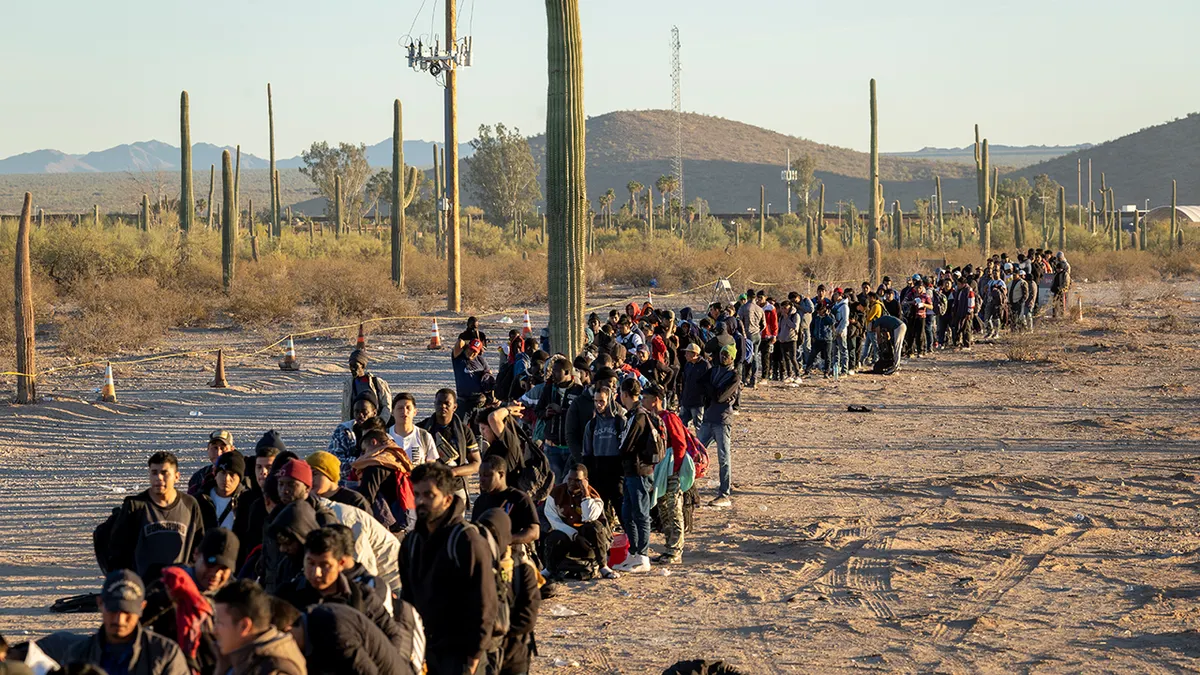
At the border itself, the story is one of sustained enforcement. Federal agents have maintained a visible presence across American cities as part of what officials describe as the largest deportation operation in the country’s history. The operation has reshaped urban enforcement patterns, moving from primarily targeting individuals with criminal records to broader apprehension operations that immigration advocacy groups argue sweep up workers and families with no criminal history.
Legal challenges continue to move through federal courts at pace, with district courts in multiple jurisdictions issuing injunctions against specific elements of the administration’s immigration policies. The administration has appealed aggressively. The Supreme Court is expected to hear at least two major immigration cases in its next term that could determine the scope of executive authority over visa processing, deportation procedures, and asylum adjudication for years to come.


 Mael Jules


