 youthpublishnow@gmail.com
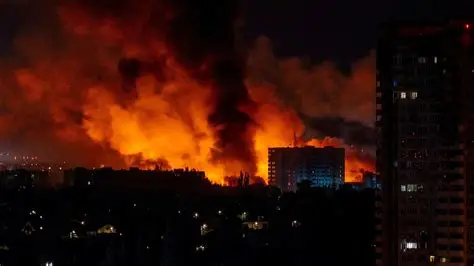
Russia launched one of its most devastating aerial assaults of the entire war on Tuesday night, firing 73 ballistic missiles and 656 drones at Ukraine in a single overnight campaign that killed at least 22 civilians in Kyiv, injured 138 more, and struck residential districts across Dnipro, Zaporizhzhia, Poltava, and Kharkiv. Ukrainian President Volodymyr Zelenskyy called the attack an act of deliberate mass terror, vowing that every missile fired would speed up the arrival of greater international consequences for Moscow.
The scale of Tuesday’s strike makes it one of the largest single aerial campaigns since Russia’s full-scale invasion began. Ukrainian air defense units intercepted dozens of incoming projectiles, but the sheer volume of the assault overwhelmed certain defensive corridors. Emergency services rushed to clear debris from collapsed apartment blocks in Kyiv’s northern districts, where rescue workers worked through the night searching for survivors trapped under rubble.
European intelligence officials believe the escalation signals growing military and economic pressure inside Russia. The Institute for the Study of War, which tracks daily battlefield developments, confirmed this week that Russia’s ground advances have largely stalled across multiple front lines. Ukraine’s armed forces have meanwhile expanded their long-range strike capability, hitting Russian energy facilities, arms depots, and military logistics hubs deep inside Russian territory, including drone raids that reached suburbs of Moscow.
Zelenskyy addressed European leaders directly on Tuesday, calling on NATO members to immediately lift remaining restrictions on the use of long-range weapons supplied to Kyiv. Several European capitals, including Berlin, Paris, and Warsaw, issued emergency communiques condemning the attack and pledging accelerated military support. The European Union’s foreign policy chief echoed those calls, pushing for an urgent session of the bloc’s defense council.
Washington’s response remained measured. The White House issued a formal condemnation but stopped short of announcing new weapon packages, reflecting an ongoing internal debate within the Trump administration over the scope of continued American military involvement in the conflict. Congressional voices from both parties pushed back, with Senate Armed Services Committee members demanding a clearer Ukraine strategy.
The attack also re-energized discussions inside the European Parliament over whether to redirect frozen Russian sovereign assets, estimated at more than 300 billion euros held across European financial institutions, toward Ukraine’s reconstruction and military procurement. That legal and political debate has dragged on for months but Tuesday’s carnage is expected to accelerate it sharply.
Energy infrastructure remained a primary Russian target. Ukraine’s national grid operator reported widespread power outages across four oblasts following the night’s strikes, forcing emergency load shedding across hospitals, schools, and water treatment facilities. Humanitarian organizations working inside Ukraine warned that continued attacks on the power grid could trigger a second wave of mass displacement into European Union member states this winter.
On the battlefield, Ukrainian drone forces continued pressing their tactical advantage. Kyiv’s military intelligence unit confirmed multiple successful strikes on Russian Black Sea fleet logistics facilities and a large ammunition depot in Belgorod Oblast. These asymmetric operations have drawn growing praise from Western military analysts, who say Ukraine is effectively rewriting the doctrine of drone warfare in real time.
Read More: European Union Overhauls Migration Policy in 2026 with Controversial Deportation Push and Offshore Detention Centers
The war now approaches its fifth year with no ceasefire in sight. Russia’s military posture continues to reflect a strategy of exhaustion, targeting civilian infrastructure to break Ukrainian public morale while grinding forward along select front-line sectors. Ukraine’s counter-strategy focuses on deepening Russia’s logistical costs and demonstrating to Western allies that the country retains both the will and the tactical creativity to fight effectively.
Analysts at the Royal United Services Institute warn that the window for a negotiated settlement remains narrow and closing fast. With Russia testing NATO’s collective resolve and Ukraine fighting with limited external reinforcements, the coming weeks could determine the strategic trajectory of the conflict well into 2027.

 Mael Jules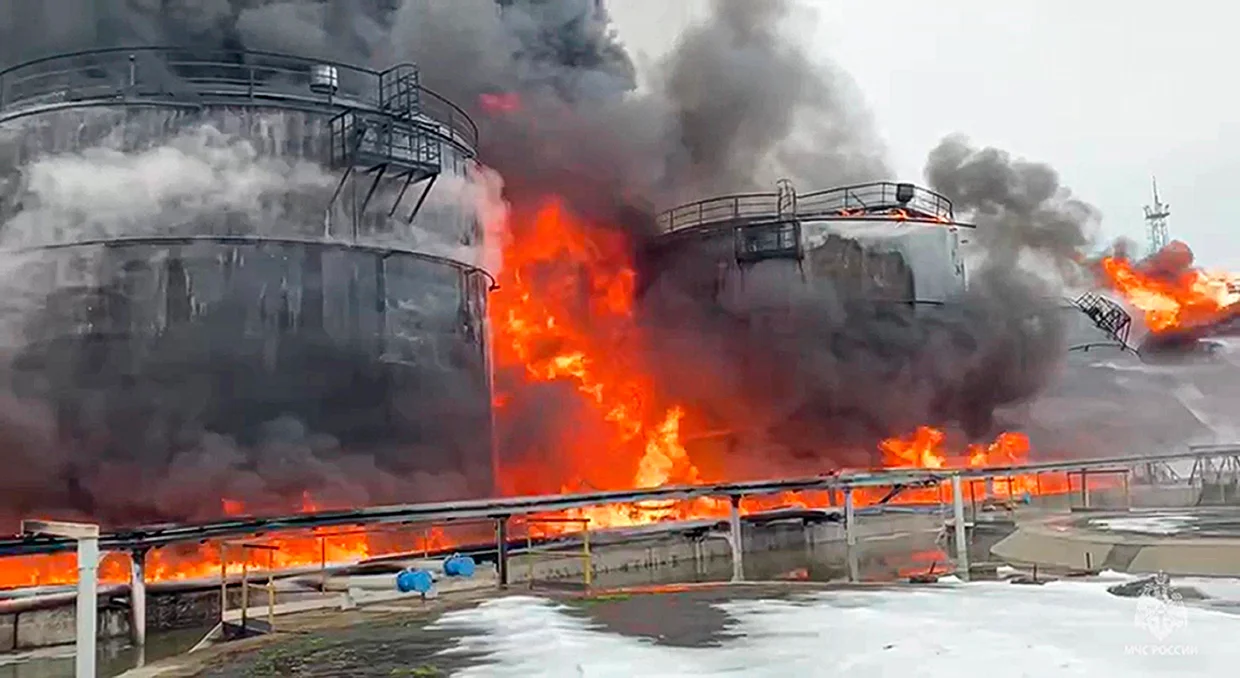
 youthpublishnow@gmail.com