 youthpublishnow@gmail.com
Dnn247.com | Breaking News | May 30, 2026 | Ebola | DRC | Uganda | Global Health Emergency
The Ebola outbreak driven by the Bundibugyo strain of the virus reached 1,262 suspected and confirmed cases and at least 241 deaths across the Democratic Republic of Congo and Uganda as of May 29, 2026, according to updated figures from WHO and the European Centre for Disease Prevention and Control. The outbreak, which began in Ituri Province in northeastern DRC and has now spread into North Kivu, South Kivu, and Uganda’s capital Kampala, is expanding at a pace that prompted Uganda to close its border with the DRC on May 28 and forced Doctors Without Borders to launch what the organization describes as a large-scale emergency response.
The DRC Ministry of Health confirmed 125 laboratory-confirmed cases including 17 deaths, alongside 906 suspected cases including 223 suspected deaths, as of May 28. The numbers reflect a data revision that reclassified some cases and removed non-cases, making the confirmed figures more precise but not reducing the overall gravity of the outbreak’s trajectory. Uganda has confirmed nine cases including one death, with at least three directly linked to travel from DRC. The border closure reflects Uganda’s government assessment that contact tracing and monitoring of cross-border movement alone cannot adequately contain the spread.
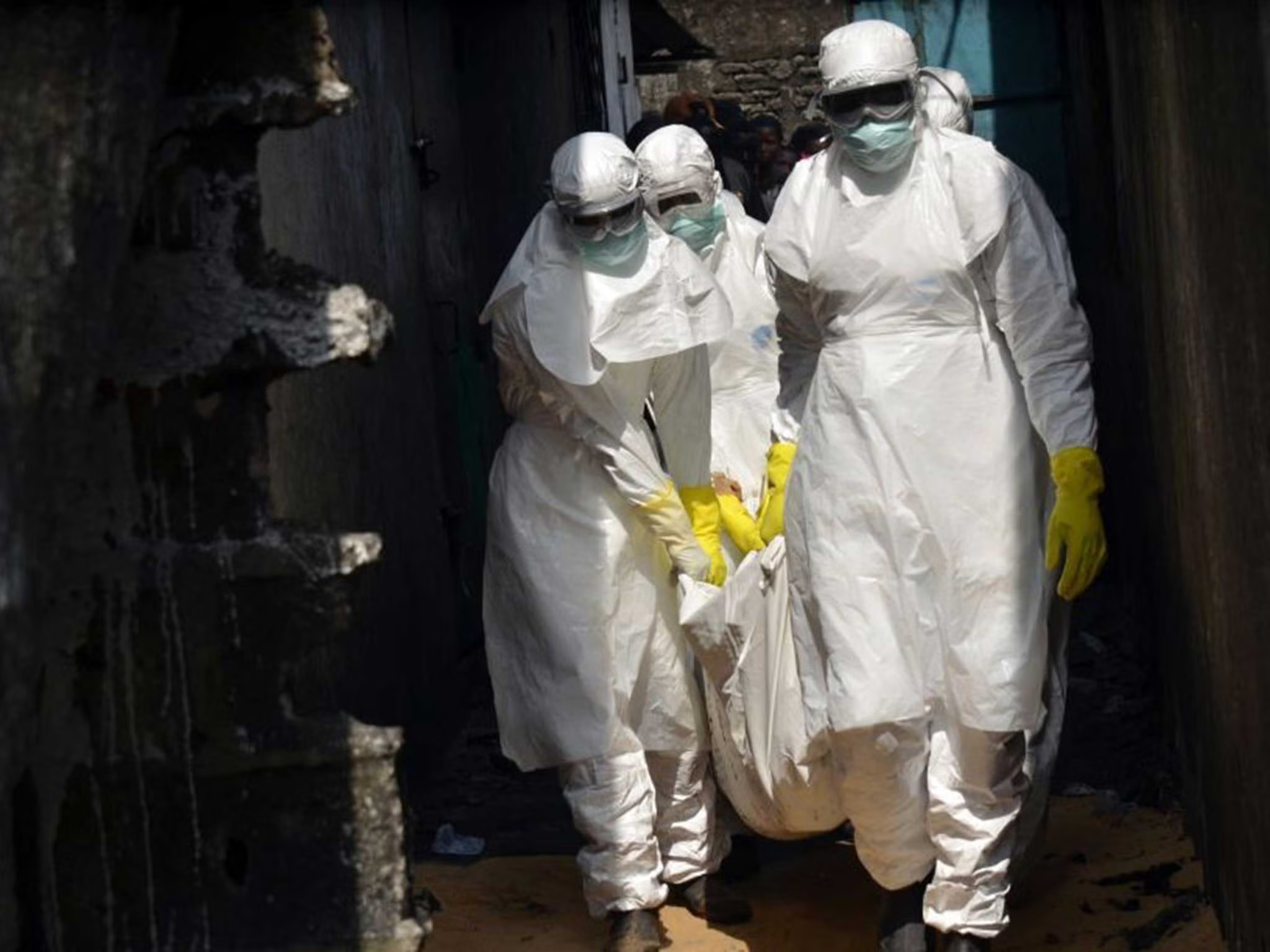
Doctors Without Borders, known internationally as MSF, published its assessment of the situation on May 29, describing the response as urgent and the humanitarian context as extraordinarily difficult. MSF teams have mobilized medical, logistical, and support staff alongside essential supplies in Ituri Province, working alongside the DRC Ministry of Health and international partners. MSF emphasized that the true extent of the outbreak remains unknown because diagnostic capacity in the affected areas is limited and reporting is almost certainly incomplete. The organization has established patient isolation and treatment facilities in multiple health zones.
The WHO Director-General Tedros Adhanom Ghebreyesus has warned publicly of what he describes as a catastrophic collision of disease and conflict in Ituri. That phrase captures precisely the challenge that makes this outbreak so difficult to contain. Ituri Province is one of the most conflict-affected regions in the DRC, a country that has experienced continuous armed insecurity in its eastern provinces for three decades. The presence of armed groups limits access for health workers, creates population displacement that spreads infection through communities, and generates the kind of community trauma and distrust of outside institutions that makes voluntary cooperation with Ebola response protocols deeply challenging.
The Bundibugyo strain complicates the clinical response at every level. The vaccines stockpiled from the devastating 2014 West Africa Ebola epidemic and subsequent DRC outbreaks target the Zaire ebolavirus. The Bundibugyo strain is genetically distinct enough that those vaccines provide little or no protection. No approved treatment exists for Bundibugyo virus disease. Researchers are testing promising candidates, and WHO has worked to accelerate access to experimental therapies under compassionate use frameworks, but the basic reality is that the primary tools available for saving lives are early detection, rapid isolation, and high-quality supportive clinical care. Delivering all three in a conflict zone with limited healthcare infrastructure is enormously difficult.
The international response has expanded significantly in the two weeks since WHO declared a Public Health Emergency of International Concern on May 17. The United States CDC is supporting laboratory capacity, field epidemiology, logistics, and coordination through its existing partnerships with the DRC and Uganda health ministries. On May 18, the CDC and the Department of Homeland Security jointly announced enhanced travel screening and entry restrictions at U.S. airports for travelers from affected countries. Canada imposed a 90-day entry ban for travelers from DRC, Uganda, and South Sudan.
A Kenya court ruling on May 29 halted a U.S. plan to open a 50-bed Ebola treatment facility in Nairobi, adding a legal complication to the regional response effort. The ruling reflects the complex politics of hosting Ebola treatment infrastructure, where communities fear that the presence of an Ebola facility increases rather than reduces their exposure risk. Managing that fear while building the regional treatment capacity needed to contain the outbreak requires careful, sustained community engagement of the kind that takes time to achieve.
The WHO has made community engagement its most emphatic priority. The Director-General has stated repeatedly that outbreaks are only brought under control when communities trust the response and actively participate in it. In Ituri, where government forces and international organizations have sometimes been associated with violence, displacement, and exploitation in the historical memory of local communities, building that trust is an extended process. Contact tracing currently follows over 1,000 contacts in Ituri alone, but the accuracy of those contact lists depends entirely on whether affected communities are willing to identify and report their social networks to health authorities.
Read More: Ebola Outbreak Declared Global Health Emergency as WHO Upgrades DRC Risk to ‘Very High’ and 10 Countries Face Imminent Threat
The economic consequences of the outbreak extend beyond the immediate health crisis. Travel and trade restrictions imposed by multiple countries create ripple effects across regional economies that are already strained by the global energy crisis generated by the Iran conflict. The combination of an Ebola emergency and sustained high energy prices places governments in eastern Africa under compounded fiscal and logistical pressure.
As of this morning, the outbreak continues to grow. The 60-day window that WHO considers critical for determining whether an outbreak will be contained or will expand into an uncontrollable epidemic is already running. Every day matters. Every contact traced, every case isolated early, every community meeting that builds a bridge of trust between responders and residents is a day’s progress toward containment. The world has done this before. The question now is whether the lessons of 2014 and every outbreak since can be applied fast enough in a context that presents almost every possible obstacle simultaneously.


 youthpublishnow@gmail.com
 Mael Jules